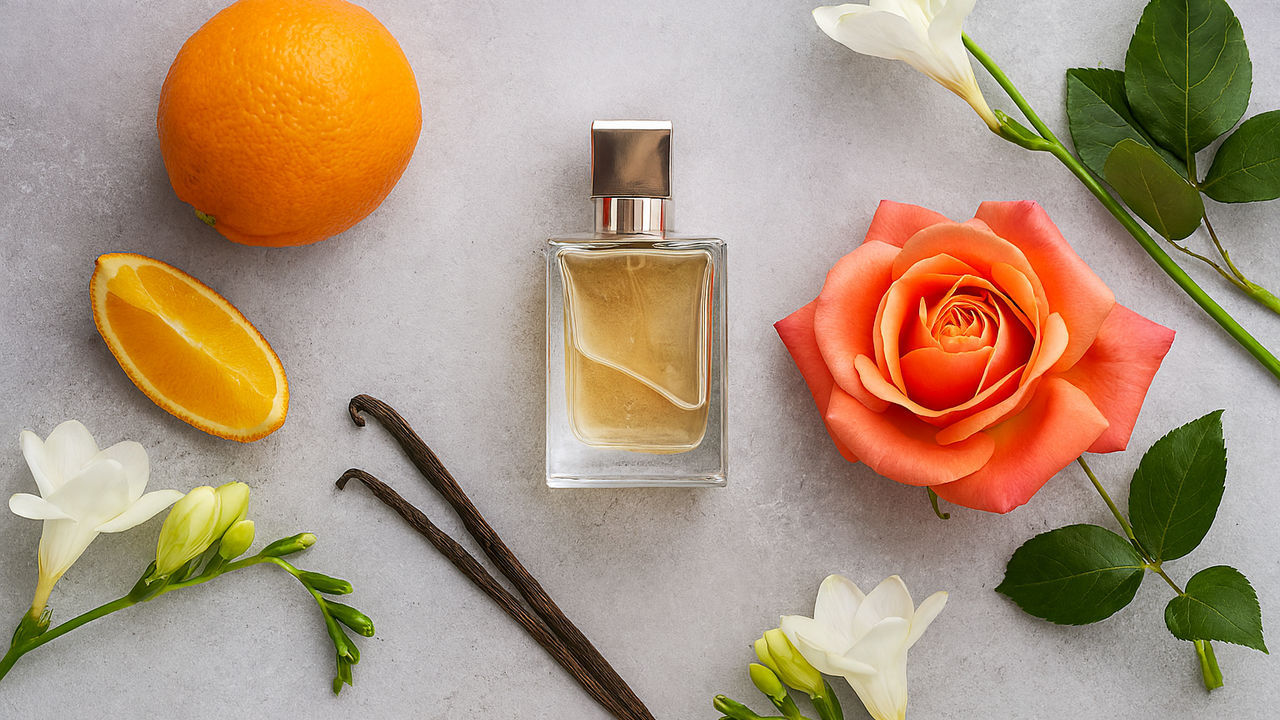
Just like a song has a beginning, middle, and end, a fragrance evolves. Notes are categorized into a fragrance pyramid to describe this evolution.
Top Notes
The first impression. These are the light, volatile scents you smell immediately upon spraying. They last about 5-30 minutes and often include citrus, light fruits, and fresh herbs. Their purpose is to grab your attention.
Middle (or Heart) Notes
The core of the fragrance. They emerge as the top notes fade and make up the main body of the scent. These notes are usually softer and more rounded, lasting for several hours. Examples include florals like rose and jasmine, and spices like cinnamon and nutmeg.
Base Notes
The foundation and final impression. These are the heavy, rich scents that appear last and linger on the skin for hours, even a full day. They provide depth and longevity. Common base notes include woods, musk, vanilla, and amber.
The Fragrance Families: Scent Categories
Fragrance families are a way of classifying scents based on their dominant characteristics. Understanding these families helps you narrow down what you like and dislike.
Floral
This is the most popular family, defined by the scent of flowers. They can range from single-flower (soliflore) scents to complex bouquets.
Notes to Expect: Rose, jasmine, lily of the valley, tuberose, peony, and gardenia.
Fresh
Clean, bright, energetic, and uplifting. This family includes sub-families like citrus, green, and aquatic scents. They are perfect for daytime and warm weather.
Notes to Expect: Lemon, lime, bergamot, grapefruit, mandarin, and orange.
Some of the well-known perfumes in this family include Dolce & Gabbana Light Blue, Chanel Chance Eau Fraîche, Giorgio Armani Acqua di Gio, and Chanel Allure Homme Sport.
Woody
These scents are rich, warm, and earthy, often associated with nature and stability. They can be very grounding and are a staple in many masculine and unisex fragrances.
Notes to Expect: Sandalwood, cedarwood, vetiver, oud, and patchouli.
Oriental (or Amber)
Warm, sensual, and often exotic fragrances. They are complex and rich, typically containing spices, resins, and sweet notes. Ideal for evening wear.
Notes to Expect: Vanilla, amber, musk, cinnamon, clove, and incense.
Subfamilies and Blends
Beyond the main families, there are blended styles that add character:
Fruity Florals
Blends of berries, peach, pear, or apple with floral notes, creating playful and approachable fragrances that are both sweet and elegant.
Gourmand
Edible-like notes that evoke food and desserts—think chocolate, coffee, caramel, honey, and baked goods. These "good enough to eat" fragrances are comforting and often addictive.
Chypre
A sophisticated category featuring a classic structure of citrus top notes, floral heart, and a distinctive mossy-woody base with oakmoss and patchouli. Chypre represents timeless elegance.
Aromatic/Fougère
Fresh yet woody fragrances, often featuring lavender and oakmoss, that create a clean but grounded scent profile. This style is considered the foundation of men's perfumery.
Aquatic/Oceanic
Fresh, clean scents that evoke the feeling of ocean breeze, sea spray, or a crisp morning by the water. These are light, airy, and refreshing.
Fragrance Marketing Terms Explained
These terms help decode perfume descriptions into the experiences you’ll smell.
Fragrance Concentrations: How Strength Affects Note Development
Understanding concentration levels helps predict how fragrance notes will perform on your skin
Parfum (20-40% fragrance oils)
The most concentrated and longest-lasting. Notes develop slowly and linger for 8+ hours. Base notes are particularly prominent, creating rich, deep fragrances perfect for special occasions.
Eau de Parfum/EDP (15-20%)
Strong concentration with excellent longevity, averaging 6-8 hours, although some EDPs will last over 8 hours. All three note layers are well-balanced, making this the most popular choice for daily wear.
Eau de Toilette/EDT (5-15%)
Lighter and more refreshing, with an average of 3-6 hours longevity. Top and middle notes are more pronounced, while base notes are softer. Perfect for daytime and office wear.
Eau de Cologne/EDC (2-5%)
The lightest concentration lasts an average of 2-3 hours. Dominated by fresh top notes with minimal base note development. Ideal for hot weather and frequent reapplication.